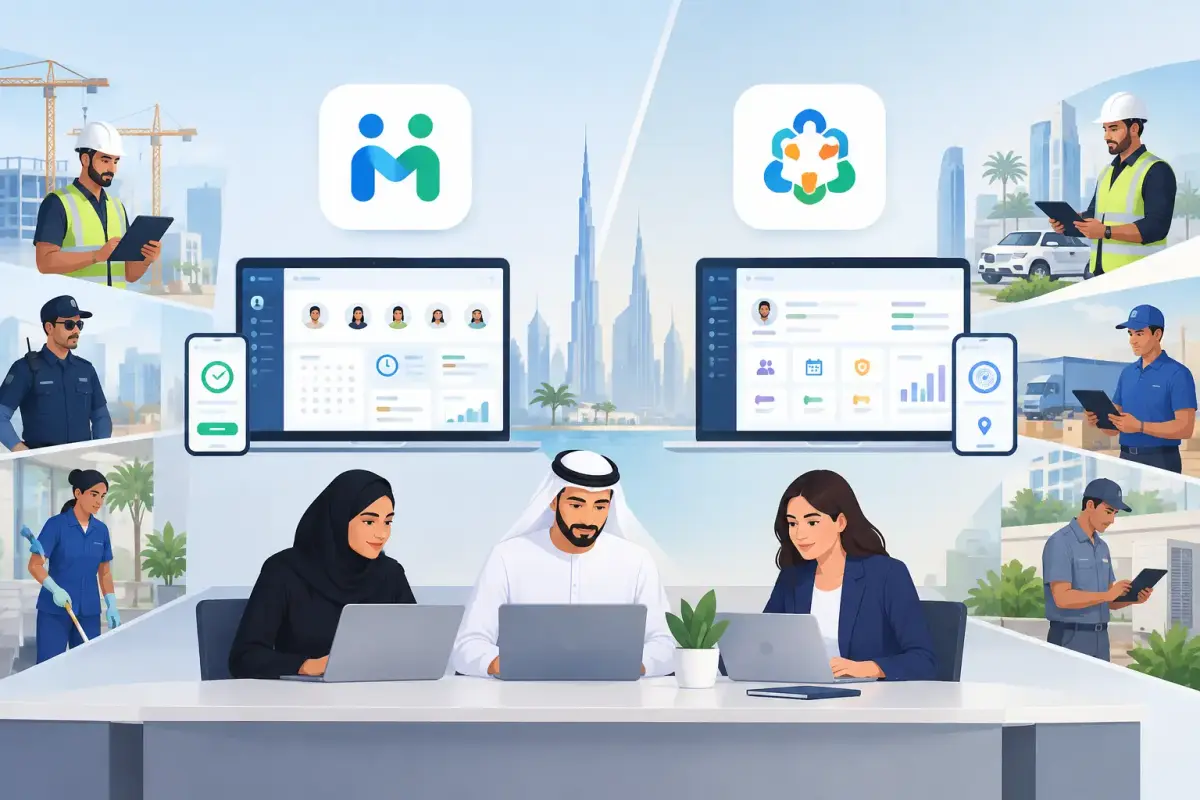
A growing business can manage basic employee data in many systems. The real test comes at month-end, when attendance exceptions, shift changes, overtime, leave balances, expense claims, and payroll approvals all need to match. That is where the Mowazaf vs Zoho People decision becomes practical rather than theoretical.
Both platforms help companies move away from spreadsheets and disconnected HR processes. The better choice depends on where your teams work, how complex your attendance is, whether payroll is part of the requirement, and how much regional configuration your business needs.
Mowazaf vs Zoho People at a Glance
Zoho People is a cloud HR platform within the wider Zoho ecosystem. It is commonly considered by businesses looking for employee records, leave management, attendance, employee self-service, approvals, and configurable HR workflows. It can be a sensible option for companies already using other Zoho products or those that want a broadly applicable HR platform.
Mowazaf is built around the day-to-day workforce needs of businesses in the UAE, GCC, and MENA. It combines HRMS, attendance, shifts, timesheets, leave, claims, approvals, payroll support, and employee self-service in one platform. Its focus is not simply recording HR information. It is helping HR, finance, and operations teams run the work that happens before payroll and across active sites.
The distinction matters most for companies managing a mix of office staff, mobile employees, shift workers, and site-based teams. A platform may look similar on a feature list, but its fit becomes clear when managers need to approve a timesheet, investigate a missed clock-in, or prepare payroll without chasing updates across departments.
HR Records and Employee Self-Service
Both Mowazaf and Zoho People centralize employee information and reduce reliance on paper files. Employees can access relevant information and submit requests, while managers gain better visibility into team activity.
Zoho People may appeal to organizations that want broad HR configuration and already operate within Zoho's application environment. Its workflow flexibility can suit teams with established internal processes and the time to configure them.
Mowazaf takes a more operationally focused approach for SMEs and growing companies. Employee profiles, documents, onboarding and offboarding steps, leave requests, claims, approvals, and manager actions are designed to remain straightforward for everyday users. Arabic and English support also helps businesses operate across multilingual teams without forcing employees into workarounds.
For a company where HR has one or two people handling a fast-growing workforce, ease of adoption is not a minor detail. If employees and supervisors need extensive guidance to submit basic requests or approve attendance, the system can add friction instead of removing it.
Attendance Is Often the Deciding Factor
Attendance is where many HR software comparisons stop being equal. An office with fixed schedules may only need simple check-in records and leave tracking. A security company, contractor, cleaning provider, maintenance business, or logistics operator may need far more control.
Mowazaf is designed for fixed and variable shifts, mobile and desktop clock-in and clock-out, geofencing, face recognition, absence tracking, overtime visibility, and timesheet approvals. These functions give operations teams a clearer view of who is present, where attendance was recorded, and which exceptions need action before payroll is finalized.
Zoho People offers attendance and time-related capabilities that can work well for standard office use cases. However, businesses with complex field operations should assess their actual workflow in detail. Ask whether supervisors can review site-level attendance quickly, whether mobile clock-ins fit the working environment, and whether shift and overtime data move cleanly into payroll preparation.
This is not about choosing the longest feature list. It is about reducing disputes and manual correction. If payroll staff must export attendance, validate changes through messages, and manually calculate overtime every month, the underlying problem remains.
Questions to Test During a Demo
Use real operating scenarios, not generic screens. For example, ask how the platform handles a worker moved to a different shift mid-month, an employee who clocks in from an approved work site, or a supervisor approving timesheets for several teams. Also test the process for missed punches, late arrivals, overtime requests, and leave that overlaps with a rostered shift.
A useful system should make exceptions visible early. The goal is not to monitor every employee more closely. It is to give HR and operations a reliable process that avoids last-minute payroll surprises.
Payroll and Regional Fit
Payroll is another area where the needs of UAE and GCC businesses can differ from those of global HR software buyers. Salary components, deductions, adjustments, leave impacts, claims, attendance inputs, and approval controls need to be organized accurately before payroll is processed.
Mowazaf supports payroll automation, salary adjustments, claims and expenses, and UAE WPS payroll requirements. It is localized for the UAE, Saudi Arabia, Egypt, Lebanon, and Syria, which makes it particularly relevant for regional companies looking for a system shaped around local workforce operations. This does not replace legal or payroll advice, but it helps teams maintain clearer payroll records and reduce avoidable manual errors.
Zoho People is primarily an HR platform, so businesses evaluating it for payroll should confirm the exact payroll setup they require, including integrations, local processing needs, and ownership of payroll calculations. A company with a separate payroll provider or established finance workflow may be comfortable with that arrangement. A company seeking tighter HR, attendance, and payroll coordination may prefer an all-in-one regional platform.
The right question is not whether a tool has a payroll-related option. It is whether the data HR collects every day can be used by finance without repeated exports, duplicate entry, and reconciliation work.
Workflows, Reporting, and Daily Management
Both platforms can help replace email chains and paper approvals with structured digital workflows. The value comes from consistency. Managers know what requires their attention, employees can track the status of requests, and HR can see where approvals are delayed.
Zoho People can be a good fit for teams that need configurable workflow rules and have internal resources to administer their HR software. Organizations already using the wider Zoho suite may also value keeping systems under one vendor ecosystem.
Mowazaf focuses on workflows that connect directly to workforce operations: leave, attendance changes, timesheets, claims, salary adjustments, and approvals. Reporting helps HR, finance, and operations teams review workforce data without building a separate spreadsheet for every monthly meeting. Its AI layer adds employee engagement and performance insights, while shareable employee profiles can support professional digital identity needs.
For growing businesses, simple reporting often wins over highly technical reporting. The most useful report is the one a manager can understand, act on, and trust without waiting for a specialist to prepare it.
Which Platform Fits Your Business?
Choose Zoho People if your priority is a general HR platform, your attendance requirements are relatively standard, and your business is already invested in Zoho applications. It can be a practical choice when you have the capacity to configure workflows and coordinate any separate payroll requirements.
Choose Mowazaf if you need HR, attendance, shifts, timesheets, approvals, claims, and payroll support to work together for UAE or GCC operations. It is particularly suited to SMEs, growing companies, and heavy-workforce businesses that need mobile attendance, geofencing, face recognition, and clearer control over field and site-based teams.
The decision also depends on implementation expectations. A system should fit the people who will use it daily: employees submitting requests from a phone, supervisors managing shifts, HR maintaining records, and finance preparing payroll. If a platform works only for the system administrator, it will not deliver the operational improvement the business expects.
Make the Comparison With Your Real Workforce Data
Before committing, map one full payroll cycle from clock-in to approval to payroll preparation. Include exceptions, not just ideal scenarios. Look at how long it takes to correct a missed attendance record, approve overtime, process a claim, update a salary adjustment, and produce a manager-ready report.
For UAE and GCC companies that want fewer spreadsheets and better workforce visibility, Mowazaf offers a practical path to centralize those steps without making HR more complicated.