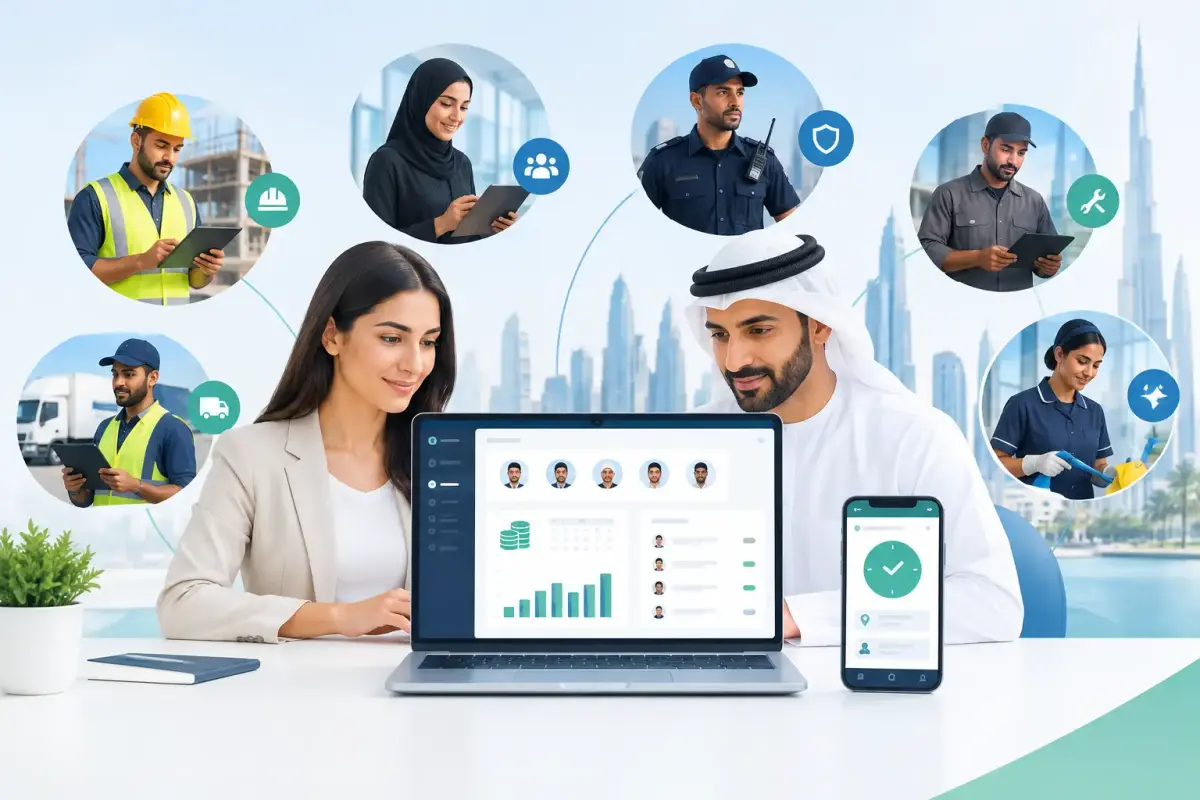
A payroll run should not begin with chasing spreadsheets, checking WhatsApp messages for overtime approvals, or asking site supervisors who was actually present. Yet for many growing businesses, that is exactly what happens. The right payroll software turns payroll into a connected process, using approved workforce data instead of manual assumptions.
For businesses with office teams, field staff, multiple shifts, or employees across different locations, payroll accuracy depends on what happens long before payday. Attendance, leave, overtime, salary changes, claims, and approvals all need to reach payroll in a clear and controlled way. When they do not, finance and HR spend valuable time correcting avoidable issues.
What Payroll Software Should Actually Do
Payroll software should do more than calculate a final salary figure. It should give HR, finance, managers, and employees a shared process for turning work records into accurate payroll data.
At a practical level, this means keeping employee salary information in one place, recording adjustments clearly, and making sure approved attendance and leave data feed into the payroll process. It also means creating payslips, maintaining a useful payroll history, and reducing the risk of duplicate entries or missed updates.
For UAE businesses, payroll tools should also support UAE WPS payroll requirements and help teams prepare payment files with less manual effort. This does not replace financial oversight or legal guidance, but it gives payroll teams a more organized foundation for recurring payroll work.
The difference matters most when a company grows. A process that works for 15 employees in a spreadsheet can become unreliable at 50, difficult at 150, and costly when the workforce is spread across shifts, projects, and sites.
Payroll starts with reliable workforce data
Payroll problems are often described as payroll problems, but their source is frequently attendance or approval data. An employee may have worked overtime that was never approved. A leave request may be recorded in one system but not reflected in the payroll file. A shift change may be communicated informally and never reach HR.
A connected system reduces these gaps. Mobile clock-in and clock-out, geofencing, face recognition, fixed and variable shifts, and timesheet approvals can all provide better input for payroll when they are used appropriately for the workforce. Managers can review exceptions before payroll is processed, rather than after an employee questions a payslip.
This is especially valuable for construction, security, facility management, cleaning, maintenance, logistics, and staffing operations. In these environments, workforce movement is part of the job. Payroll needs to reflect what happened in the field, not just what was planned at head office.
Approvals should not live in inboxes
Salary adjustments, claims, expenses, overtime, and unpaid leave can all affect payroll. When these items move through email threads, paper forms, or chat messages, it becomes difficult to know which request was approved, by whom, and when.
A clear workflow gives each request an owner and status. Employees submit what they need through self-service. Managers review requests based on their authority. HR and finance receive approved data without re-entering the same details. The result is not just faster processing. It is better visibility when a question arises later.
For a small business, workflows may be simple. For a company with departments, sites, or multiple approval levels, flexibility becomes more important. Good payroll operations do not force every workforce into one rigid process. They create consistent controls while allowing for how the company actually works.
The Real Cost of Manual Payroll
Manual payroll does not only consume time at the end of the month. It creates interruptions throughout the month. HR teams answer repeat questions about balances and attendance. Managers search for old approvals. Finance reconciles figures that changed after a spreadsheet was shared. Employees lose confidence when corrections are delayed.
The direct cost may be an incorrect payment. The wider cost is the time spent investigating it, adjusting records, communicating with employees, and rebuilding trust in the process. For operational teams, even a small recurring issue can become a serious distraction.
Manual work also makes reporting harder. Business owners and operations leaders need a clear view of labor costs, overtime trends, absence patterns, and workforce activity. If data is split between attendance devices, spreadsheets, paper documents, and separate payroll files, reporting becomes a monthly reconstruction exercise.
Centralizing these records gives decision-makers a more useful picture. It becomes easier to spot repeated overtime at a site, compare scheduled hours with actual hours, or identify approval bottlenecks before they affect payroll.
Choosing Payroll Software for Your Business
The best payroll software is not necessarily the platform with the longest feature list. It is the one your team can use consistently, with data that fits your payroll process and workforce model.
Start by looking at the source data. If attendance is a major payroll input, the system should connect attendance, shifts, overtime, and leave with payroll rather than treating them as separate tasks. If employees work at sites or move between locations, mobile attendance and location-based controls may be more valuable than features designed only for desk-based teams.
Next, consider who needs access. Employees should be able to view relevant information and submit requests without depending on HR for every update. Managers need visibility into their teams, approvals, schedules, and exceptions. HR and finance need control over payroll records, changes, and reporting. A system that is simple for each user group is more likely to be adopted correctly.
Localization also matters. Businesses operating in the UAE and wider GCC and MENA region need software that understands regional operating needs, supports Arabic and English, and can support WPS payroll workflows where relevant. Generic tools may appear flexible, but workarounds can bring back the same manual effort the system was meant to remove.
Finally, assess implementation realistically. A payroll platform should improve the process, not create a long technical project that employees resist. Look for a clear way to import employee data, configure salary structures and approvals, test payroll output, and train users without overwhelming them.
A Better Monthly Payroll Process
An effective payroll process has a simple rhythm. Employee records are kept current throughout the month. Attendance, leave, timesheets, overtime, claims, and salary changes are submitted and approved before a defined cutoff. HR and finance review exceptions, process payroll using approved data, and share clear payslips with employees.
The goal is not to remove human review. Payroll should always have a final check, particularly when there are unusual adjustments or a changing workforce. The goal is to focus that review on genuine exceptions rather than routine data entry.
This approach also makes payroll more predictable. Employees know where to submit requests. Managers know what they need to approve. HR does not need to chase missing records. Finance receives cleaner information for payment preparation. Everyone spends less time working around disconnected processes.
Mowazaf brings employee records, attendance, leave, shifts, timesheets, claims, approvals, and payroll into one practical cloud platform. For office-based and heavy-workforce companies, this helps turn scattered monthly tasks into a controlled workflow that is easier to manage as the business grows.
When Simplicity Is the Stronger Choice
Some companies assume payroll systems must be complicated because payroll itself is high stakes. In practice, unnecessary complexity creates new risks. If employees cannot use self-service, managers avoid approvals, or HR needs specialist support for routine updates, the system becomes another barrier.
A simple experience does not mean limited control. It means the right information is available to the right person at the right time. It means a supervisor can approve a timesheet quickly, an employee can check a payslip without sending an email, and HR can identify missing attendance data before payroll day.
That is the standard worth aiming for: payroll operations that are clear enough to run calmly, even when the business is busy.