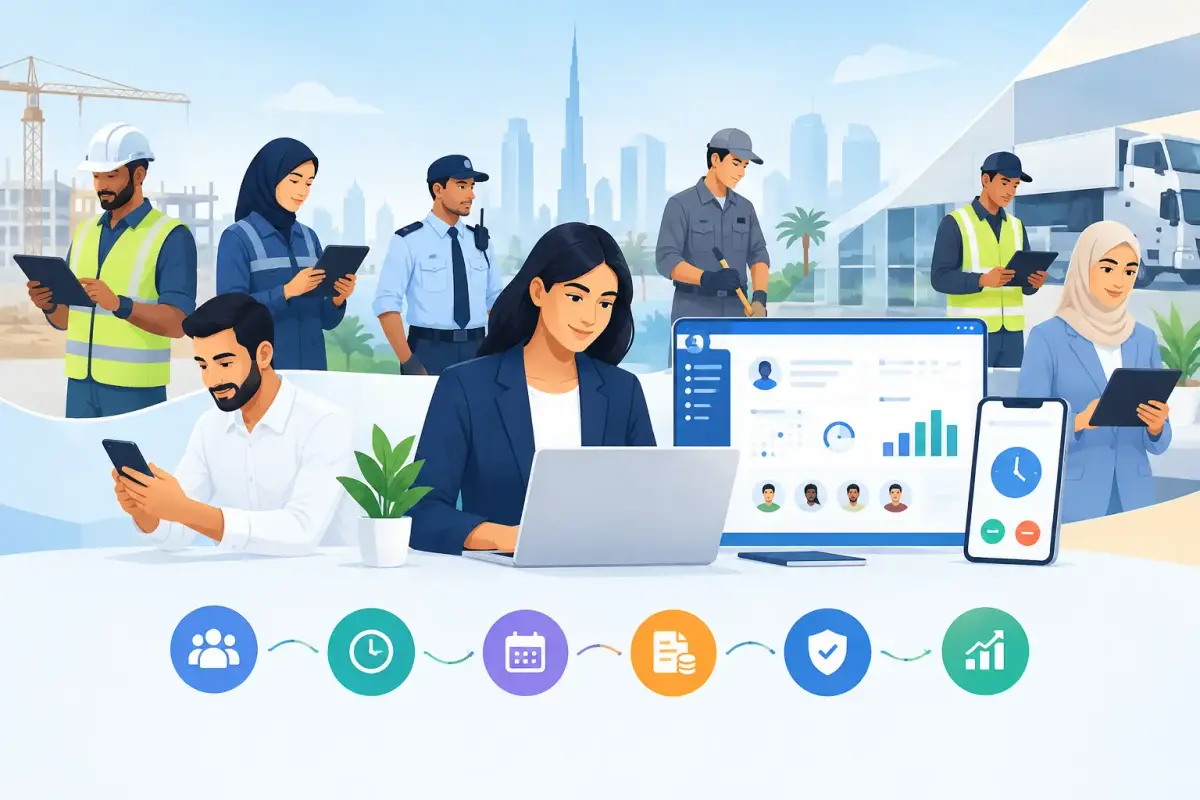
A leave request should not trigger a chain of emails, spreadsheet edits, phone calls, and last-minute payroll checks. Yet for many growing businesses, it still does. The right leave software turns a routine request into a controlled workflow: employees can submit time off, managers can see the operational impact, and HR can maintain accurate balances without chasing updates.
For companies with shifts, sites, mobile teams, or high employee volumes, this matters even more. A missed approval can leave a shift uncovered. An outdated balance can create a payroll adjustment. A paper form can disappear just when HR needs an audit trail. Leave management is not only an HR task - it affects staffing, attendance, payroll, and employee trust.
What Leave Software Should Actually Solve
Leave software is often described as a tool for requesting annual leave. That is only the starting point. A useful system should give employees a clear way to view their available balance, request the right leave type, attach supporting documents where required, and track the status of their request without repeatedly contacting HR.
For managers, the value is visibility. Before approving time off, they need to understand who else is absent, whether a team or site has enough coverage, and whether a request conflicts with planned work. For HR and finance, the system should provide a reliable record of approvals, balances, absence history, and payroll-related leave data.
The goal is not to add another portal for employees to check. The goal is to remove the manual handoffs that create confusion. When leave data sits separately from attendance and payroll, teams spend time reconciling information that should already match.
The cost of managing leave in spreadsheets
Spreadsheets can work for a very small team with simple policies. As headcount grows, they become difficult to control. Multiple people may update the same file, formulas can be changed accidentally, and managers may approve requests without HR seeing them promptly.
The issue is not simply administrative effort. Inaccurate leave balances affect employee confidence. Delayed updates make workforce planning harder. When attendance records and approved leave do not align, payroll teams must investigate exceptions at the end of the month, when time is already limited.
For a construction contractor, security provider, cleaning company, logistics operator, or healthcare staffing business, leave decisions also affect site coverage. A manager needs more than an email stating that an employee will be away. They need timely information that helps them plan shifts and avoid operational gaps.
How Leave Software Connects HR, Attendance, and Payroll
The strongest leave processes do not operate in isolation. Approved leave should be visible where work is planned and where payroll is prepared. This reduces duplicate entry and gives each team a more consistent view of employee availability.
When an employee submits a request, the workflow can route it to the appropriate manager based on department, reporting line, location, or leave type. Once approved, the employee's balance updates and the absence can be reflected in attendance records. Payroll teams can then work from approved data rather than manually collecting forms and messages.
This connection is especially valuable for companies that manage fixed shifts, rotating rosters, or variable schedules. A leave request may be straightforward for an office employee with a standard workweek. It requires more attention when an employee is assigned to a customer site, a night shift, or a location with minimum staffing requirements. The system should support the workflow without forcing operations teams to create separate manual workarounds.
That does not mean every business needs a complex setup. A smaller company may only need a few leave categories and one approval level. A multi-site organization may need different workflows by division or location. Good leave management adapts to the business rather than making the business adapt to rigid rules.
Features That Matter When Choosing Leave Software
A long feature list is not the same as a useful product. For most SMEs and operational workforce companies, the best leave software is the one employees can use correctly on day one and HR can manage without constant support.
Start with employee and manager self-service. Employees should be able to submit requests and check balances from mobile or desktop. Managers should be able to approve, reject, or return requests with context. Clear notifications help prevent requests from sitting unnoticed, but the system should not overwhelm users with unnecessary alerts.
Leave policies and balances also need flexibility. Businesses may offer different leave types, accrual methods, eligibility rules, and approval paths across employee groups. The software should make these rules manageable without turning routine policy updates into a technical project.
For workforce-based operations, attendance integration is a practical requirement. If employees clock in through mobile attendance, geofencing, face recognition, or site devices, approved leave should help explain expected absences. This can reduce attendance disputes and make exception reviews faster.
Reporting is another consideration. HR leaders need more than a list of requests. They may need to review absence trends, outstanding approvals, leave balances, and patterns by department or location. Managers need information they can act on, not reports that require hours of cleanup before they are useful.
Finally, consider language and regional fit. UAE and GCC organizations often operate with diverse workforces and need Arabic and English experiences. A platform built with regional payroll and workforce practices in mind can reduce friction for HR, managers, and employees.
Build a Leave Process Employees Will Use
Technology improves leave management only when the process behind it is clear. Before configuring a system, define the leave types your business uses, who approves each request, and what happens when a manager is unavailable. Keep the process easy to understand. If employees cannot tell which leave type to select or where their request stands, they will return to messages and informal approvals.
Approval design deserves particular attention. Too few controls can create staffing surprises. Too many approval levels slow down routine requests and frustrate employees. The right balance depends on the role, location, and operational risk. A planned annual leave request may follow one route, while a short-notice absence may need a faster notification and escalation process.
It also helps to set expectations around timing. Employees should know when to submit planned leave, managers should know how quickly to respond, and HR should have a clear process for resolving exceptions. Software makes the process visible, but it cannot replace sensible internal ownership.
Avoid these common implementation mistakes
The first mistake is copying a spreadsheet process exactly into the new system. If the old process includes duplicate approvals, unclear ownership, or manual balance corrections, digitizing it will only make the same problem faster.
The second is configuring policies without testing real scenarios. Test requests for different employee groups, partial-day absences, overlapping team requests, canceled leave, and manager absence. For shift-based workforces, test how leave appears alongside schedules and attendance data.
The third is treating rollout as an HR-only change. Managers need to understand the approval process, and employees need a simple explanation of how to submit and track requests. Short, practical guidance is usually more effective than lengthy training materials.
A Better Standard for Leave Management
Leave management should give employees clarity, managers control, and HR dependable records. It should reduce follow-up messages, protect operational coverage, and provide cleaner inputs for payroll. If a system only stores requests but does not connect people, approvals, attendance, and reporting, it leaves too much work behind.
Mowazaf brings leave workflows together with attendance, shifts, timesheets, payroll, and employee self-service in one practical platform for growing and workforce-driven businesses. That means HR teams can spend less time reconciling requests and more time keeping operations organized.
The best next step is to map one real leave request from submission to payroll. Follow every email, spreadsheet edit, approval, and manual check involved. The gaps will show you exactly where a simpler system can create immediate value.